

Research
Research for adaptive intelligence.
Biology constrains the starting state. Culture carries accumulated knowledge. Individual experience changes what happens next. Embreier studies how to represent those changes rigorously enough for a model to learn from them.
Biology · Culture · Individual experience · Learning
The thesis
Model the agent as something that changes.
An agent changes. It arrives with priors, inherits what others worked out, and is changed by what happens to it. The representation holds all of that, so it can study it.
07 returns as the new 03The next action starts from a changed agent
The programme sits at the intersection: how the state of the agent itself changes through action, consequence and experience.
The programme
The Human Model
research programme.
Human-development science supplies candidate variables and priors. Each one earns its place in the model by improving a real decision.
First-principles decomposition.
Break human development into state families, process families and transition primitives, so each candidate variable has a defined place, a unit and a timescale before it is modelled.
Cross-disciplinary convergence.
Neuroscience, biology, developmental and applied psychology, pedagogy and behavioural science each describe how people change. Where they converge, we hold a candidate prior. Where they diverge, we hold a question.
Culture and universals.
Most of what a person knows was worked out with others. We separate what holds across people from what a team, a site or a culture carries, and study how practice travels between them.
Probabilistic human state.
A person is partly observable. Their task-relevant state is held as belief with uncertainty and an expiry, kept apart from the evidence it came from, and open to their correction.
Functional empathy.
Reading what a person needs next from what they have seen, tried and demonstrated on the task, so the machine can choose the move that helps: a cue, a question, an explanation or a step back.
Reciprocal learning.
The machine learns which help works for this person. The person builds capability through the work. We study both directions, including how help today shapes independence tomorrow.
Dual human and world outcomes.
Every transition is scored twice: on what happened to the process, and on what happened to the person or team acting in it. Performance today and capability later are measured separately.
Every theme ends in a variable with a passport, a simpler proxy it must beat and a result that would remove it.
The testbed
Somewhere a prediction can be scored.
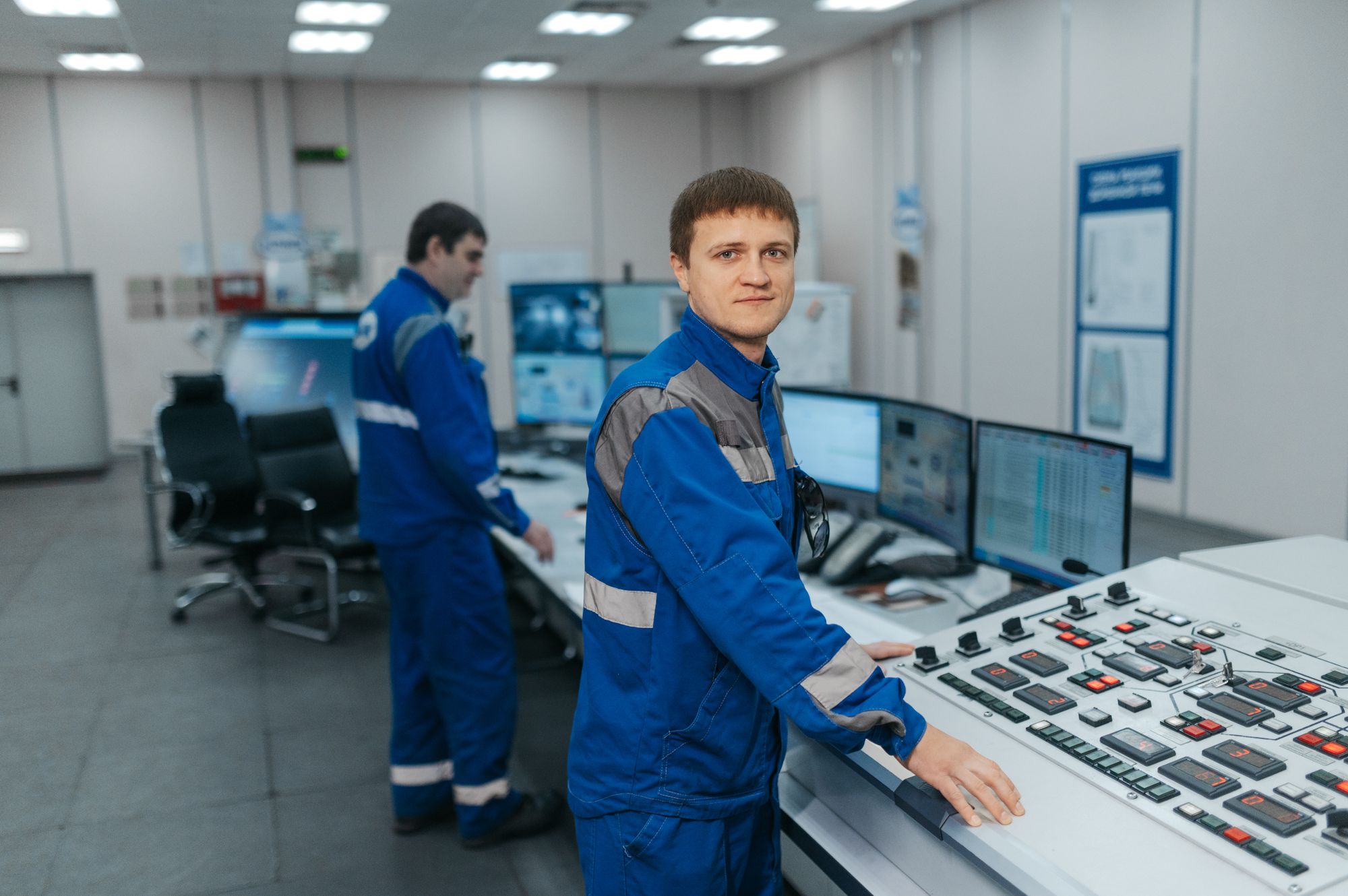
A developmental claim is only testable where state is observable, action is consequential and the outcome arrives while anyone still cares. Industrial operations give all three.
Evaluation
Measure what actually improves.
Same problem. Same data. Same input budget. Measure the difference.
The same process evidence, the same tools and the same memory budget.
A static role, task or team profile added to A.
A dynamic, governed person or team state in context, and the adaptive intervention policy.
The primary metric and its threshold are preregistered before data is seen. C earns its place by beating B net of burden and governance cost. Prediction, calibration, retention, transfer and independence are measured separately, on future time and on new sites.
What improves
Measure what lasts.
Four dimensions, measured separately, on future time and in a new situation. Every one of them can move while immediate performance holds steady.
0 / 7
Research frontier
The work behind adaptive intelligence.
Human development is the research foundation. State, intervention and improvement are what we build outward from.
Foundation
FoundationHuman-development construct
The research framework for representing human learning and adaptation, and for keeping observation, inference and judgement apart. Everything below is built outward from it.
Read →Systems
What belongs in the record, what the system is allowed to believe, and how uncertainty stays visible.
Which intervention helps, when to ask instead, and when the right move is to watch.
Retention, independence, transfer and adaptive expertise, each measured on its own.
The frontier
Build the frontier of adaptive intelligence.
The next generation of AI will need to understand more than information. It will need to understand change, adaptation, context and consequence.
We are bringing together researchers across AI, neuroscience, biology, human development, behavioural science, human factors, philosophy, ethics and HCI to build it.
Join the research frontier →